The Hidden Costs of Buying a House Nobody Talks About

Jul 5 / Luca Wilson

Introduction

When most people think about buying a home, the first thing they focus on is the deposit. That makes sense. Saving a deposit is usually the biggest challenge for first-time buyers, and it often takes years of discipline, planning, and sacrifice to get there.
But the deposit is not the full cost of buying a property. This is where many buyers get caught out. They save enough for the deposit, find a property they like, begin the buying process, and then realise there are several additional costs they had not properly planned for.
Some of these costs appear before completion. Others arrive after you move in. Some are predictable, while others are unpleasant surprises. Understanding these expenses early helps you prepare properly and avoid the stress of finding extra money at the worst possible time.
Buying a home should feel exciting, but it should also be approached with realism. The more you understand the true cost of buying and owning a property, the more confident and prepared you will feel throughout the process.

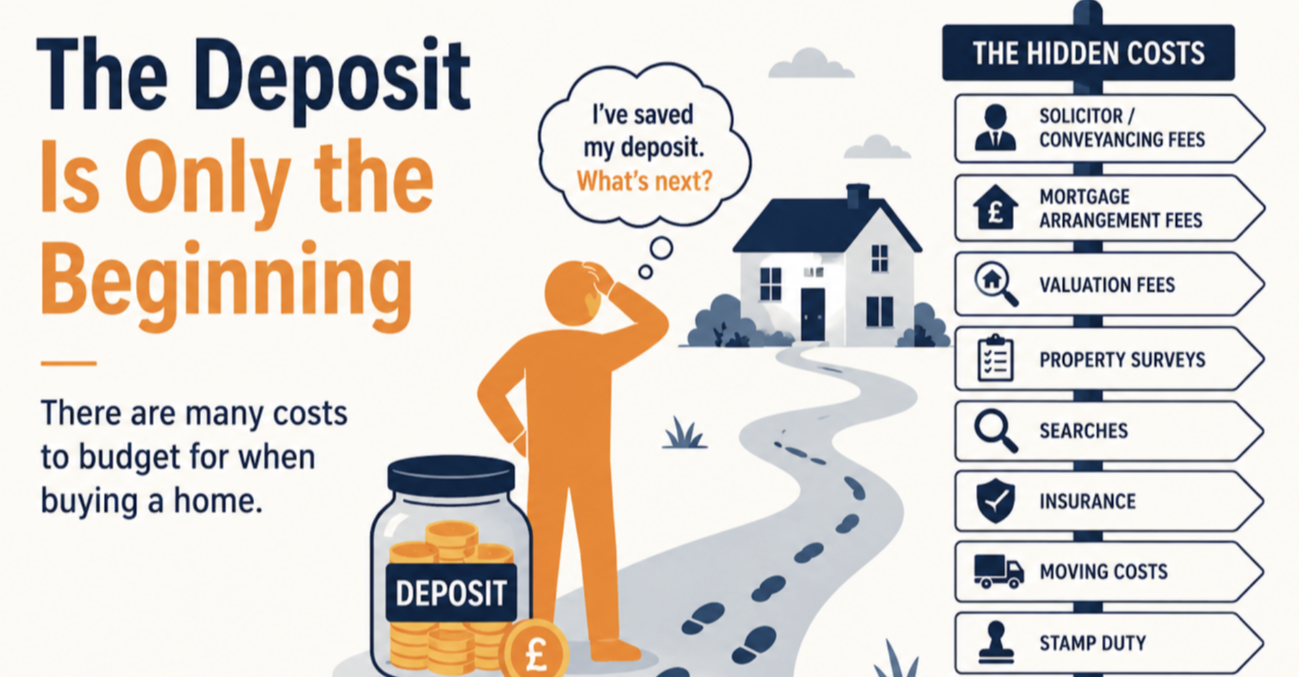
The Deposit Is Only the Beginning

Your deposit is the money you put towards the purchase price of the property. For many buyers, this is the main financial goal. However, once you begin the purchase process, you will quickly realise that the deposit is only one part of the overall cost.
You may also need money for:
  • Solicitor or conveyancing fees
  • Mortgage arrangement fees
  • Valuation fees
  • Property surveys
  • Searches
  • Insurance
  • Moving costs
  • Stamp Duty, depending on your circumstances
  • Immediate repairs or improvements

These costs can add up quickly. If you only budget for the deposit, you may find yourself financially stretched before you have even moved in.
A strong buying plan should include both the deposit and the additional costs that come with purchasing a property.

Solicitor and Conveyancing Fees

A solicitor or conveyancer handles the legal side of your purchase. Their role is to check the property title, carry out searches, review contracts, raise enquiries, liaise with the seller’s solicitor, and help guide the transaction towards exchange and completion.
This is not an area where buyers should focus only on the cheapest option. A slow or unresponsive solicitor can cause delays, frustration, and in some cases, put the transaction at risk.

When comparing legal fees, consider:
  • What is included in the quote
  • Whether searches are included
  • Whether bank transfer fees apply
  • Whether there are extra charges for leasehold properties
  • Whether the firm has good reviews
  • How easy they are to contact
  • The cheapest quote is not always the best value. Communication and reliability matter.

Survey Costs

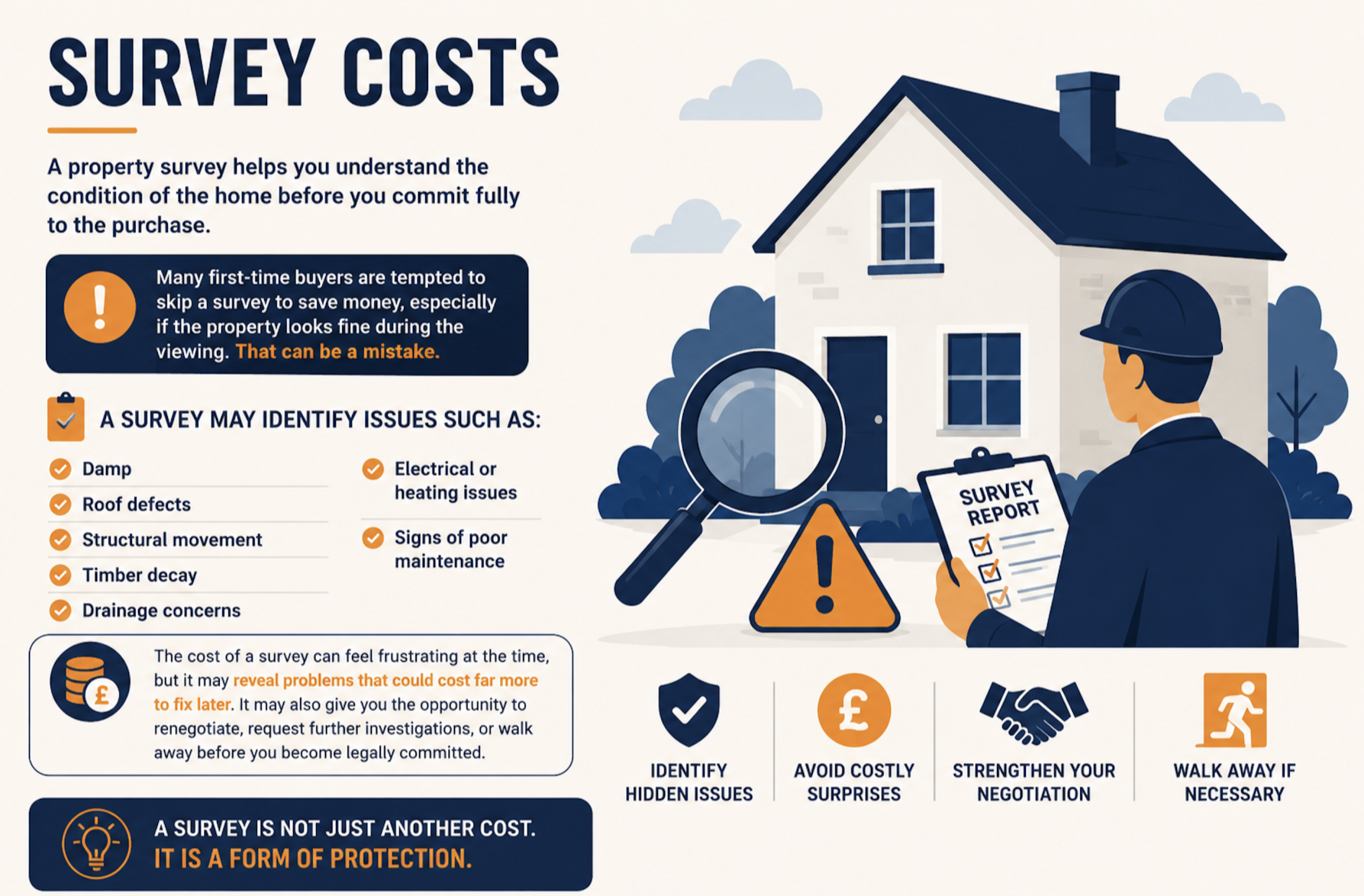
A property survey helps you understand the condition of the home before you commit fully to the purchase. Many first-time buyers are tempted to skip a survey to save money, especially if the property looks fine during the viewing.

That can be a mistake.

A survey may identify issues such as:
  • Damp
  • Roof defects
  • Structural movement
  • Timber decay
  • Drainage concerns
  • Electrical or heating issues
  • Signs of poor maintenance

The cost of a survey can feel frustrating at the time, but it may reveal problems that could cost far more to fix later. It may also give you the opportunity to renegotiate, request further investigations, or walk away before you become legally committed.

A survey is not just another cost. It is a form of protection.

Mortgage Fees and Valuation Costs Why a Realistic Budget Matters
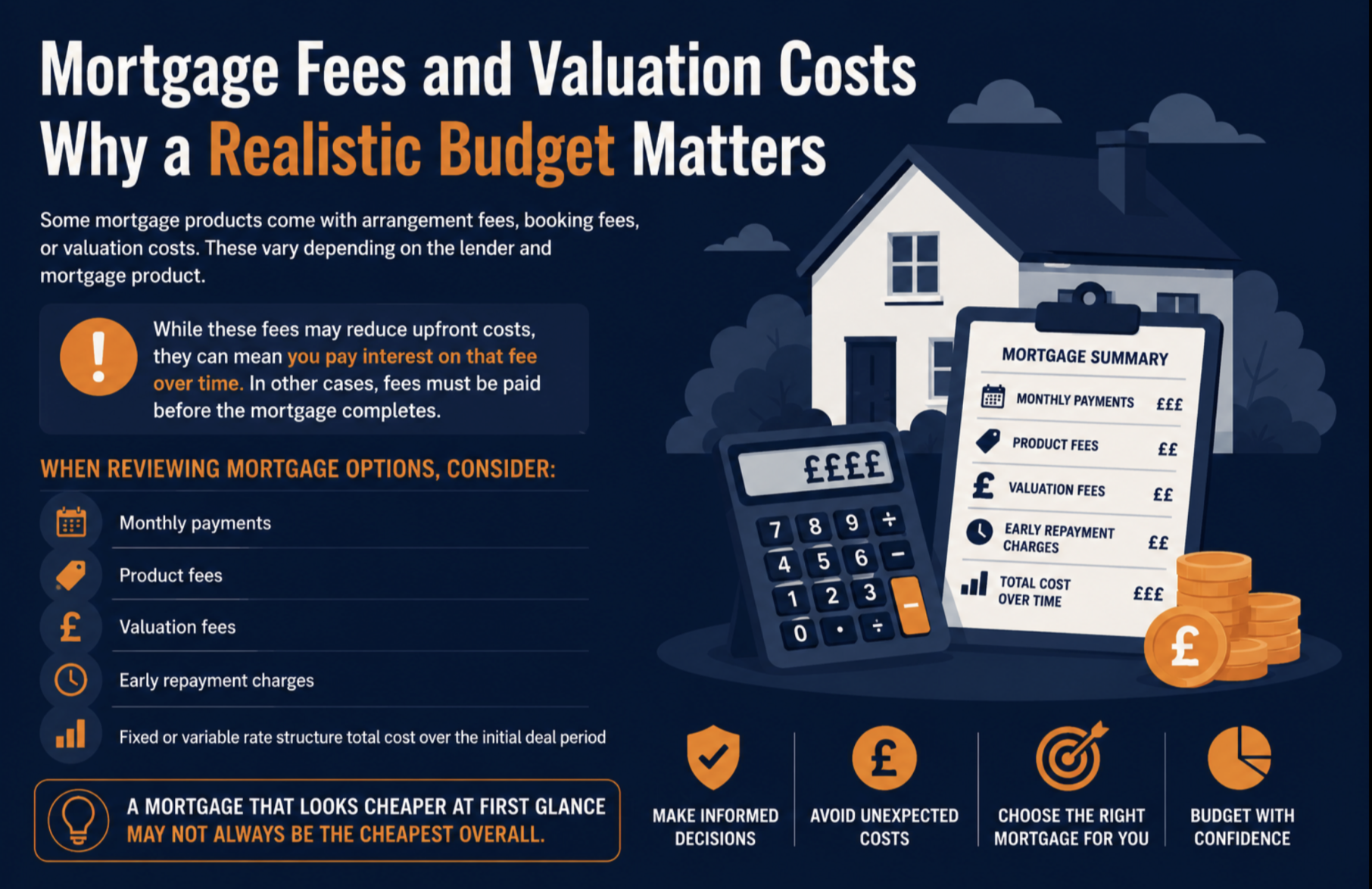
Some mortgage products come with arrangement fees, booking fees, or valuation costs. These vary depending on the lender and mortgage product. In some cases, a fee can be added to the mortgage. While this may reduce upfront costs, it can also mean you pay interest on that fee over time. In other cases, fees must be paid before the mortgage completes. Buyers should look beyond the headline interest rate and understand the full cost of the mortgage product. When reviewing mortgage options, consider: 
  • Monthly payments
  • Product fees 
  • Valuation fees 
  • Early repayment charges
  • Fixed or variable rate structure total cost over the initial deal period
A mortgage that looks cheaper at first glance may not always be the cheapest overall.

Searches and Legal Checks

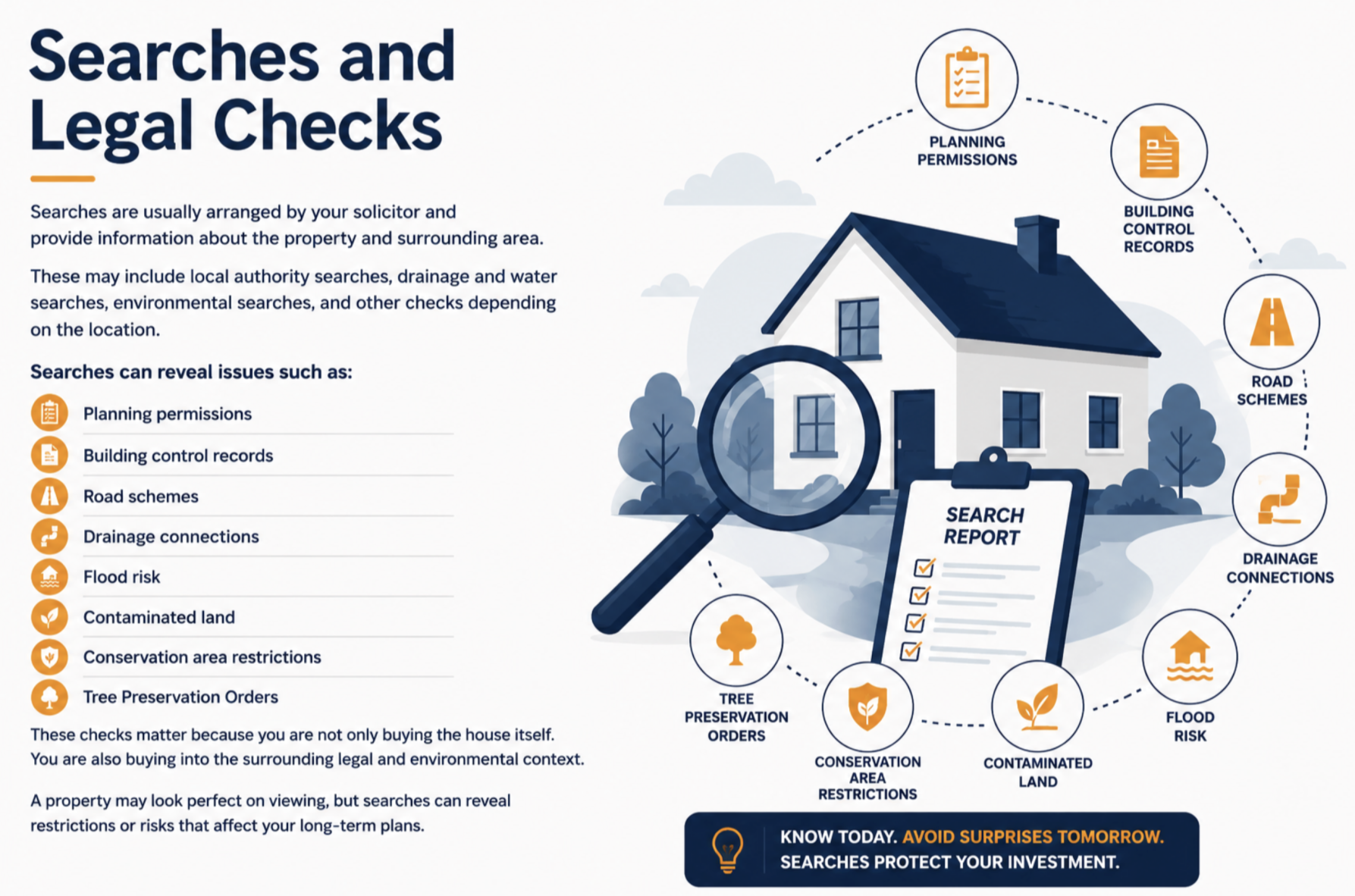
Searches are usually arranged by your solicitor and provide information about the property and surrounding area.

These may include local authority searches, drainage and water searches, environmental searches, and other checks depending on the location.

Searches can reveal issues such as:
  • Planning permissions
  • Building control records
  • Road schemes
  • Drainage connections
  • Flood risk
  • Contaminated land
  • Conservation area restrictions
  • Tree Preservation Orders

These checks matter because you are not only buying the house itself. You are also buying into the surrounding legal and environmental context.

A property may look perfect on viewing, but searches can reveal restrictions or risks that affect your long-term plans.

Stamp Duty and Tax Considerations

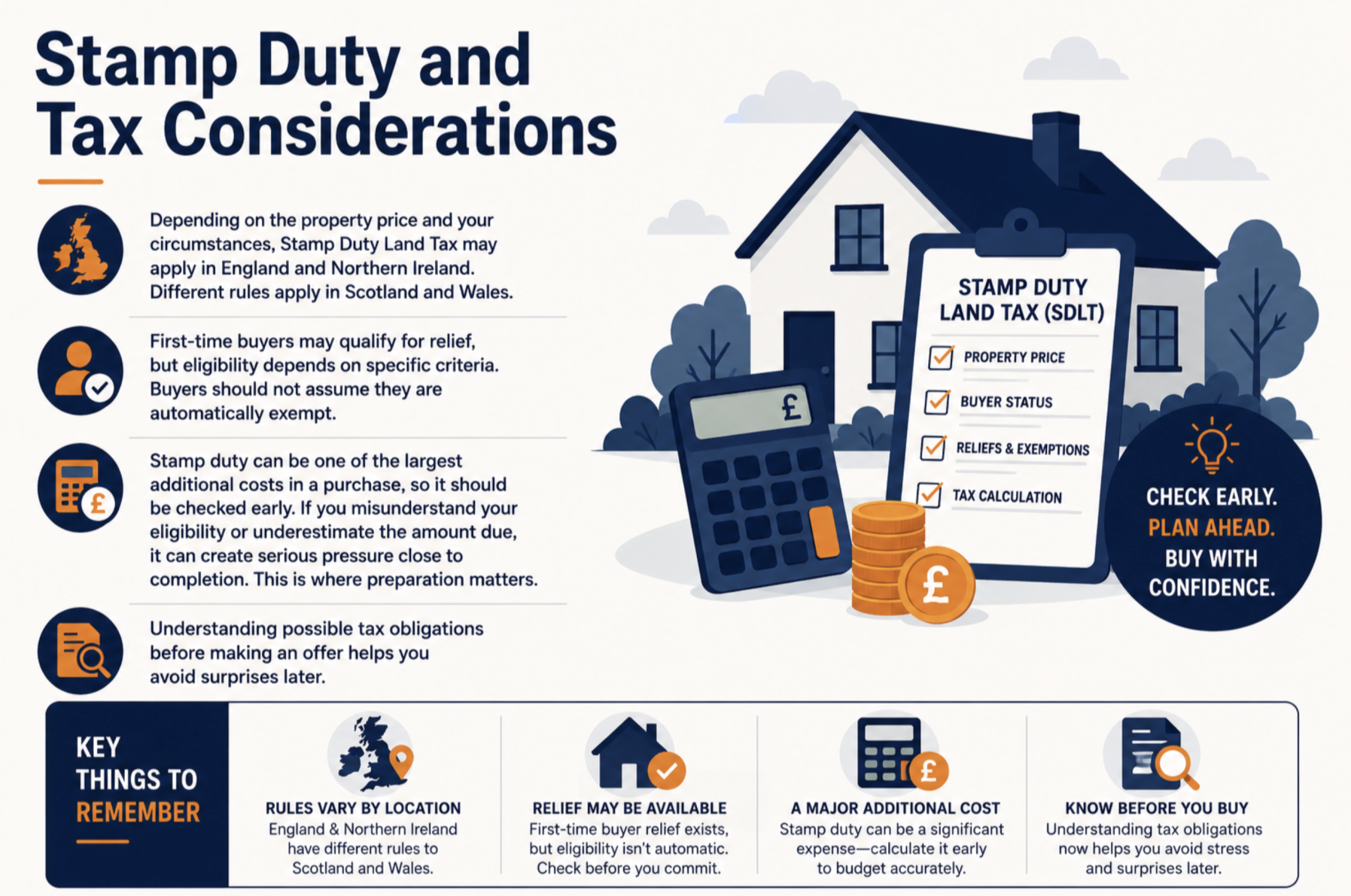
Depending on the property price and your circumstances, Stamp Duty Land Tax may apply in England and Northern Ireland. Different rules apply in Scotland and Wales.

First-time buyers may qualify for relief, but eligibility depends on specific criteria. Do not assume you are automatically exempt.

Stamp duty can be one of the largest additional costs in a purchase, so check it early. If you misunderstand your eligibility or underestimate the amount due, it can create pressure close to completion.

Understanding your likely tax bill before making an offer helps you avoid last-minute surprises.

Moving Costs

Moving costs are easy to underestimate. Depending on your situation, you may need to pay for:
  • Removal services
  • Van hire
  • Packing materials
  • Storage
  • Cleaning
  • Time off work
  • Temporary accommodation
  • Furniture delivery
If you are moving from rented accommodation, there may also be overlap between rent payments and mortgage payments. In some cases, buyers may need to cover two properties for a short period while moving. Even a simple move can become expensive if it is not planned properly. Creating a moving budget early helps you avoid last-minute financial stress.

Costs After You Move In

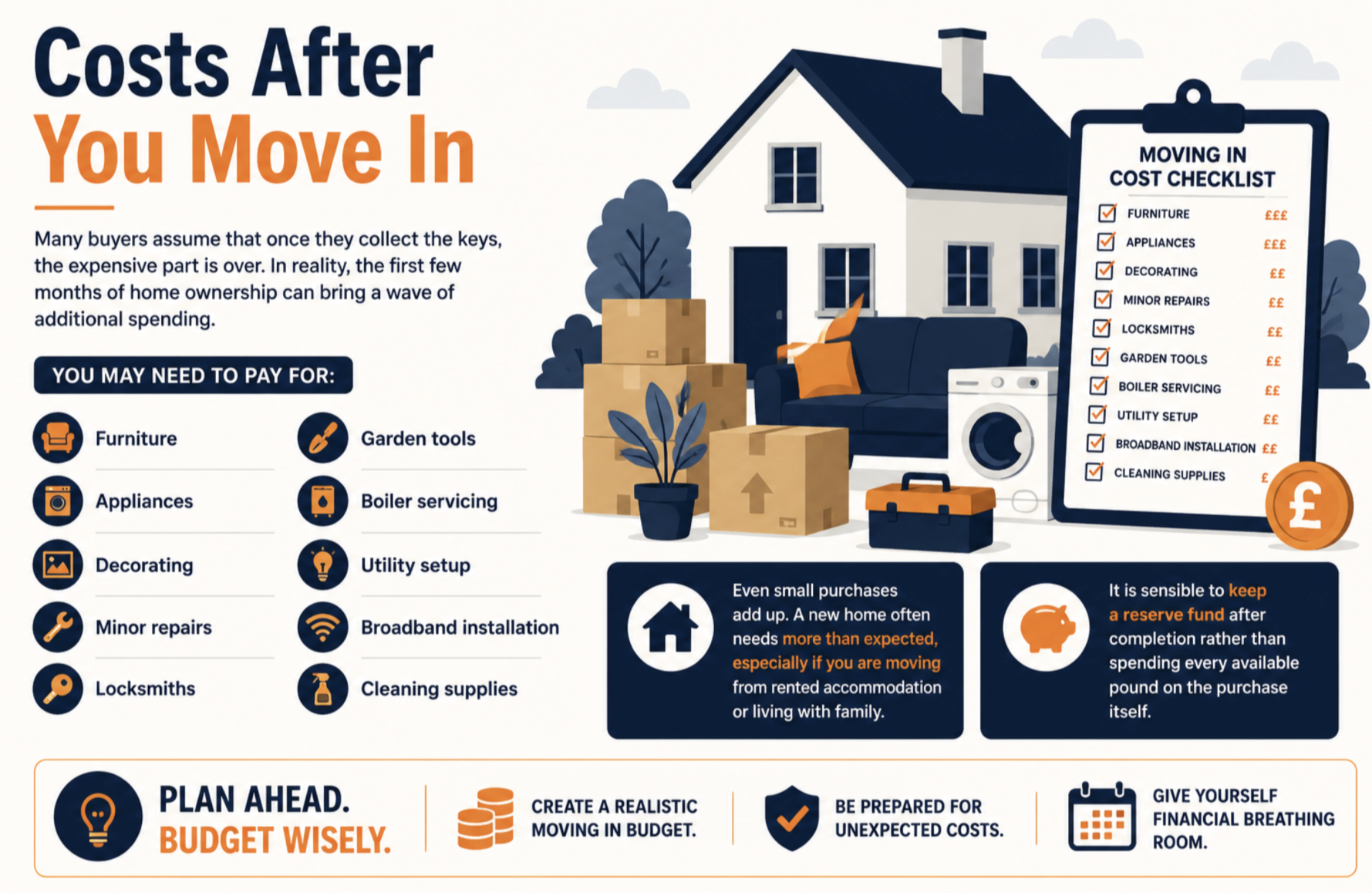
Many buyers assume that once they collect the keys, the expensive part is over. In reality, the first few months of home ownership can bring a wave of additional spending.

You may need to pay for:

  • Furniture
  • Appliances
  • Decorating
  • Minor repairs
  • Locksmiths
  • Garden tools
  • Boiler servicing
  • Utility setup
  • Broadband installation
  • Cleaning supplies

Even small purchases add up. A new home often needs more than expected, especially if you are moving from rented accommodation or living with family.

It is sensible to keep a reserve fund after completion rather than spending every available pound on the purchase itself.

Insurance and Protection

";
Some insurance may be needed before completion. For freehold purchases, buildings insurance is usually required from exchange of contracts, so you are covered if the property is damaged before you move in.
;

Cover to consider

";

Depending on your situation, you may also look at:

  • Contents insurance

  • Life insurance

  • Income protection

  • Critical illness cover

  • Home emergency cover

;

Choose what fits

";
Not every policy suits every buyer. Focus on what you need and when you need it, so you are protected without paying for cover that does not reduce real risk.
;

Unexpected Repairs Questions Every Buyer Should Ask

Every home carries maintenance risk. Even a property that appears well looked after can develop issues shortly after you move in.
Common early surprises include:

  • Leaking pipes
  • Faulty boilers 
  • Electrical problems 
  • Roof leaks
  • Damp patches
  • Broken appliances
  • Drainage issues
  • This is part of the reality of home ownership. Unlike renting, there is no landlord to call. When something breaks, the responsibility usually sits with you.

That does not mean buying is a bad decision. It means buyers should prepare for ownership as well as purchase.

Why a Realistic Budget Matters

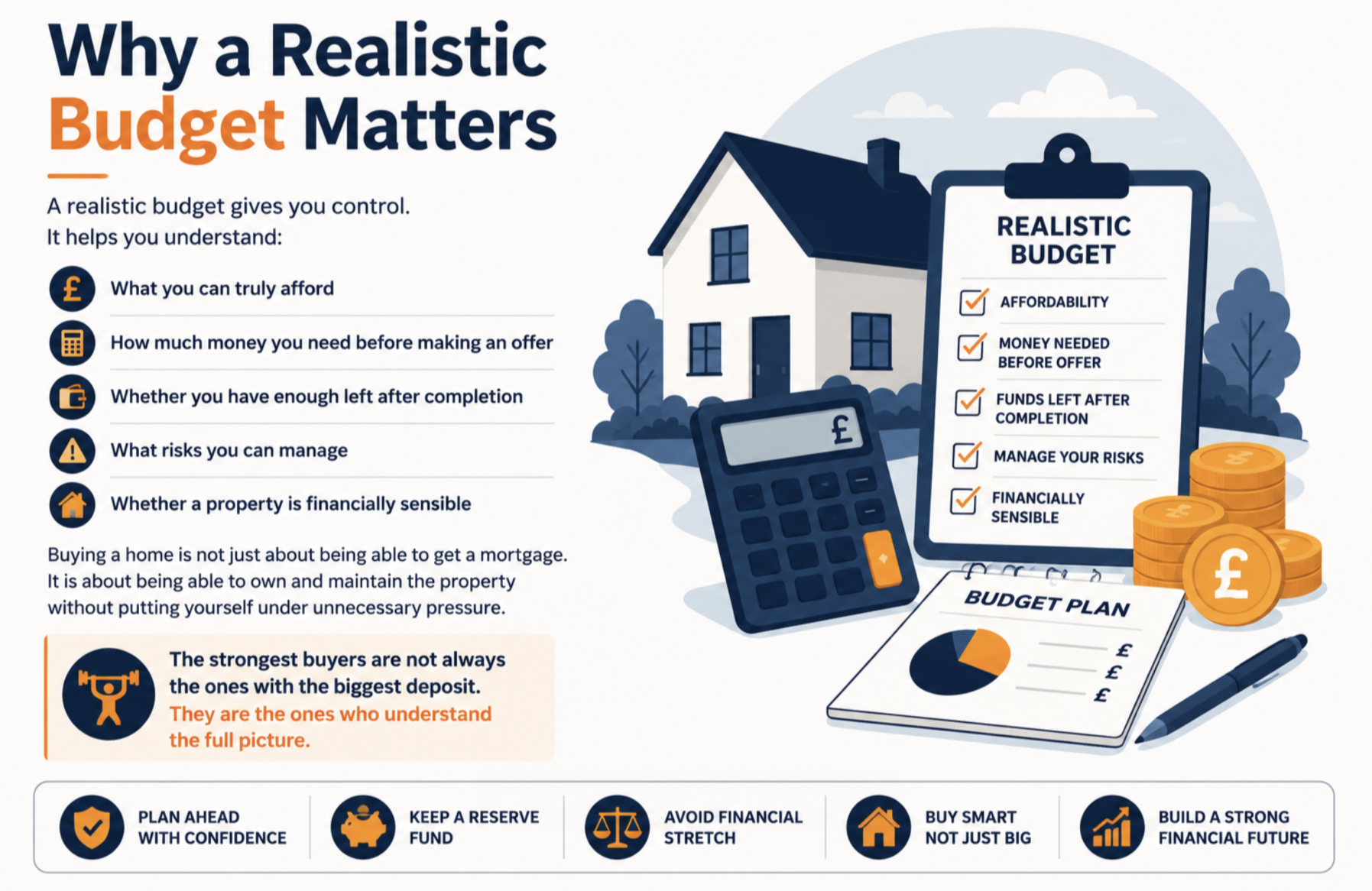
A realistic budget gives you control.
It helps you understand:
  • What you can truly afford
  • How much money you need before making an offer
  • Whether you have enough left after completion
  • What risks you can manage
  • Whether a property is financially sensible
Buying a home is not just about being able to get a mortgage. It is about being able to own and maintain the property without putting yourself under unnecessary pressure.
The strongest buyers are not always the ones with the biggest deposit. They are the ones who understand the full picture.

Final Thoughts

The hidden costs of buying a house are not there to scare you. They are there to be understood, planned for, and managed.
A home can be one of the most rewarding purchases you ever make, but it should not be approached with blind optimism. The more prepared you are, the smoother the process is likely to feel.
By planning beyond the deposit, asking the right questions, and leaving room for unexpected costs, you can move through the buying process with more confidence and fewer surprises.
Buying a home is not just about getting the keys. It is about being ready for everything that comes with them.

Want to know more?

Explore courses and resources that cover everything you need to know about buying your first UK property

Created with