Understanding Property Chains: Why Communication Matters More Than You Think

Aug 5 / Luca Wilson

Introduction

When buying a property, one of the terms you are likely to hear is “property chain.” For many first-time buyers, this can sound confusing at first. You may think your purchase only involves you, the seller, your mortgage lender, and your solicitor. In reality, your purchase may be connected to several other people’s property transactions, and this can affect how quickly and smoothly your move progresses.
A property chain is created when one property transaction depends on another. For example, the person selling you their home may need to buy another property before they can move out. The person selling that next property may also need to purchase somewhere else. This creates a chain of linked transactions, where each person is relying on the next part of the chain completing successfully.
As a first-time buyer, you are often seen as an attractive buyer because you usually do not have a property to sell. This means you may be chain-free, which can make your offer stronger compared with a buyer who needs to sell their own home first. However, even if you are a first-time buyer, it is still important to understand how chains work because your purchase may still be affected by other people further up the chain.
A strong property chain depends on organisation, realistic expectations, and communication. When communication breaks down, delays can build quickly. Understanding how chains work can help you ask better questions, choose the right professionals, and reduce the risk of your purchase becoming unnecessarily stressful.

What Is a Property Chain?

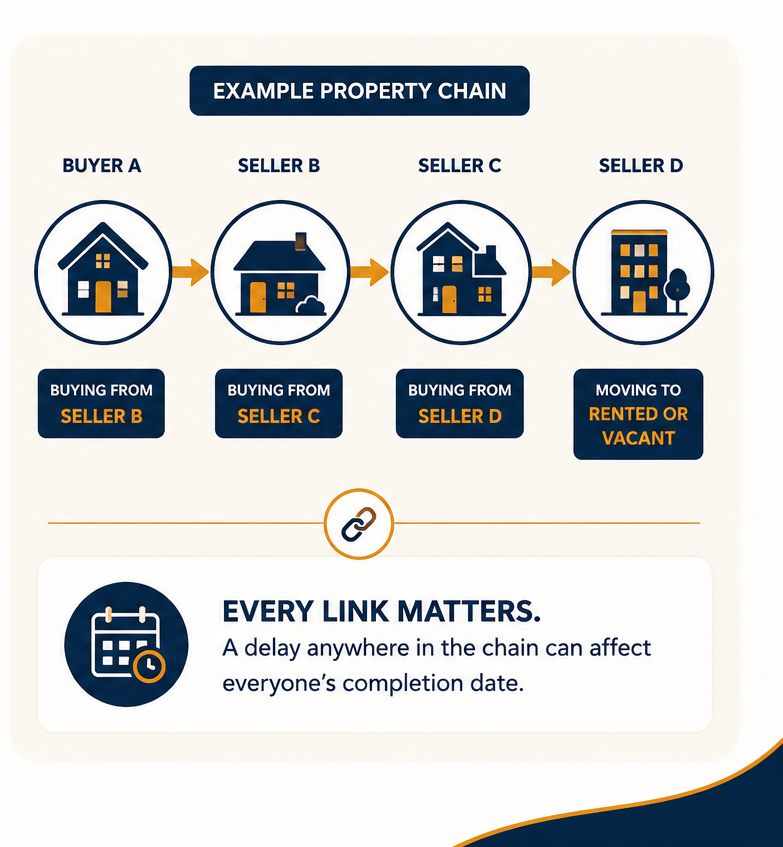
A property chain is a sequence of linked property transactions. Each person in the chain is usually buying and selling at the same time.
For example:
Buyer A is buying from Seller B.
Seller B is buying from Seller C.
Seller C is buying from Seller D.
Seller D may be moving into rented accommodation or a vacant property.
In this example, Buyer A may not be able to complete unless Seller B can also complete their onward purchase. Seller B may not be able to complete unless Seller C is ready, and so on.
This is why property chains can become complicated. Even if your part of the transaction is moving well, a delay elsewhere in the chain may still affect your completion date.


Why First-Time Buyers Can Be in a Strong Position

First-time buyers are often attractive to sellers because they usually do not have a property to sell. This means they are not dependent on another sale completing before they can buy

A chain-free buyer can offer several advantages:
  • Fewer linked transactions
  • Lower risk of delays from a related sale
  • Potentially quicker progress
  • Greater certainty for the seller
  • A simpler overall transaction
This does not mean a first-time buyer will automatically win every negotiation. Sellers will still consider the offer amount, mortgage position, deposit size, timescale, and overall reliability of the buyer.

However, being chain-free can strengthen your position, especially if you also have a mortgage Agreement in Principle and proof of deposit available.

When a First-Time Buyer May Still Be Linked to a Chain
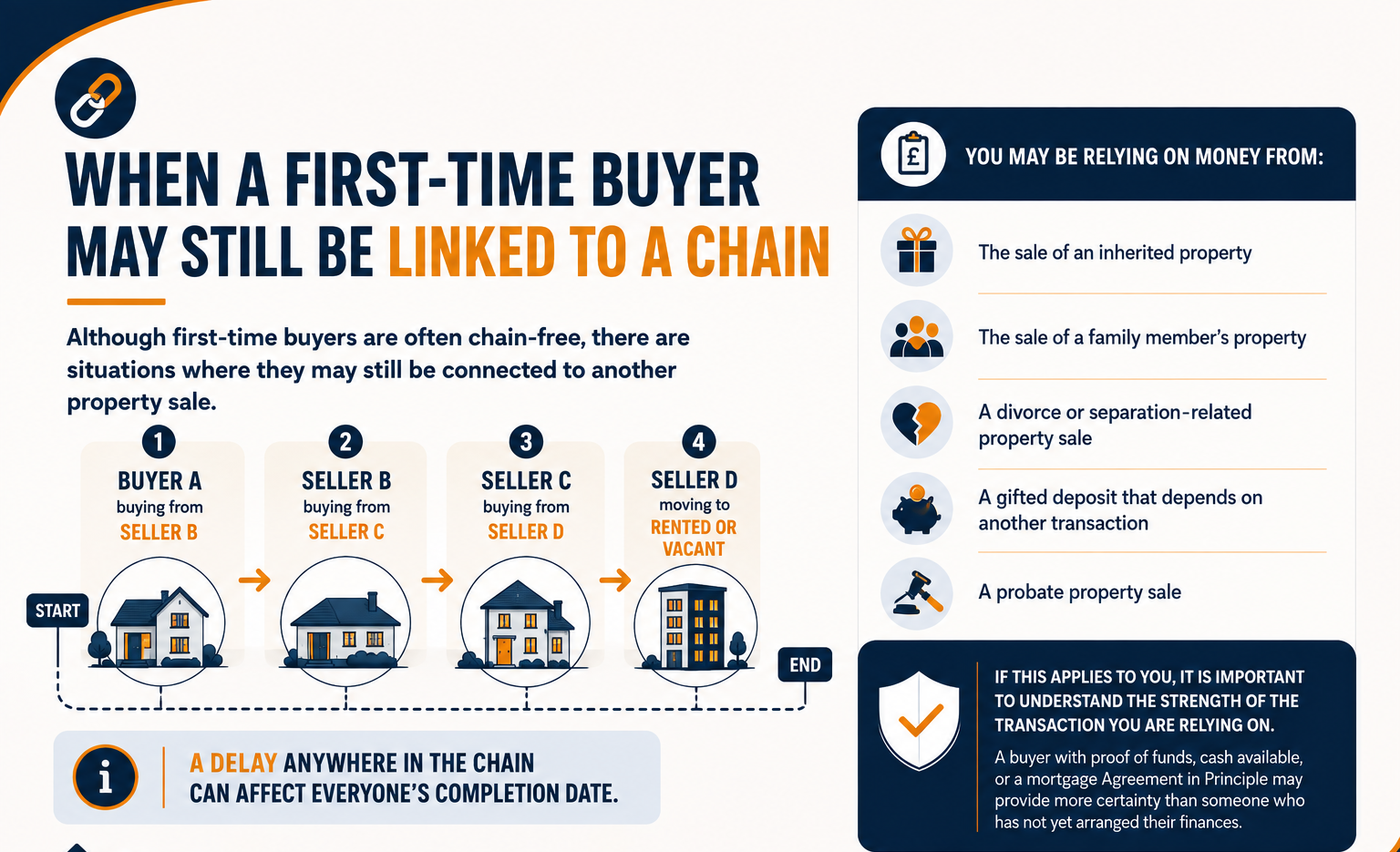
Although first-time buyers are often chain-free, there are situations where they may still be connected to another property sale.
For example, you may be relying on money from:
  • The sale of an inherited property
  • The sale of a family member’s property
  • A divorce or separation-related property sale
  • A gifted deposit that depends on another transaction
  • A probate property sale
In these cases, your ability to purchase may depend on another property transaction completing first. This can make your position more complicated than a standard chain-free first-time buyer.
If this applies to you, it is important to understand the strength of the transaction you are relying on. A buyer with proof of funds, cash available, or a mortgage Agreement in Principle may provide more certainty than someone who has not yet arranged their finances.

Why Chain Strength Matters

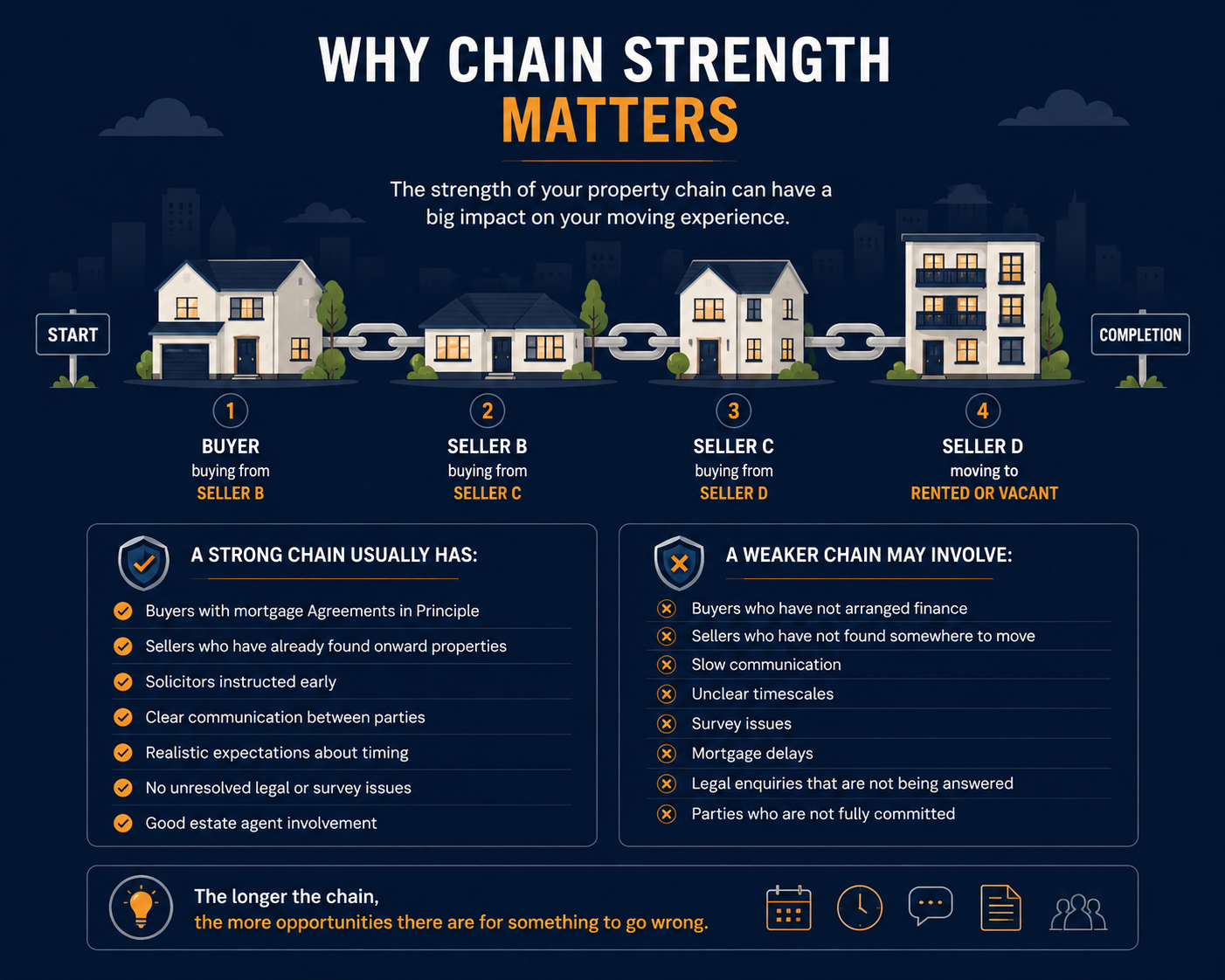
Not all property chains are equal. Some are short, organised, and well managed. Others are long, uncertain, and vulnerable to delay.A strong chain usually has:
  • Buyers with mortgage Agreements in Principle
  • Sellers who have already found onward properties
  • Solicitors instructed early
  • Clear communication between parties
  • Realistic expectations about timing
  • No unresolved legal or survey issues
  • Good estate agent involvement
A weaker chain may involve:
  • Buyers who have not arranged finance
  • Sellers who have not found somewhere to move
  • Slow communication
  • Unclear timescales
  • Survey issues
  • Mortgage delays
  • Legal enquiries that are not being answered
  • Parties who are not fully committed
The longer the chain, the more opportunities there are for something to go wrong. This does not mean long chains cannot complete successfully, but they often require stronger communication and more patience.

The Role of Estate Agents in a Property Chain
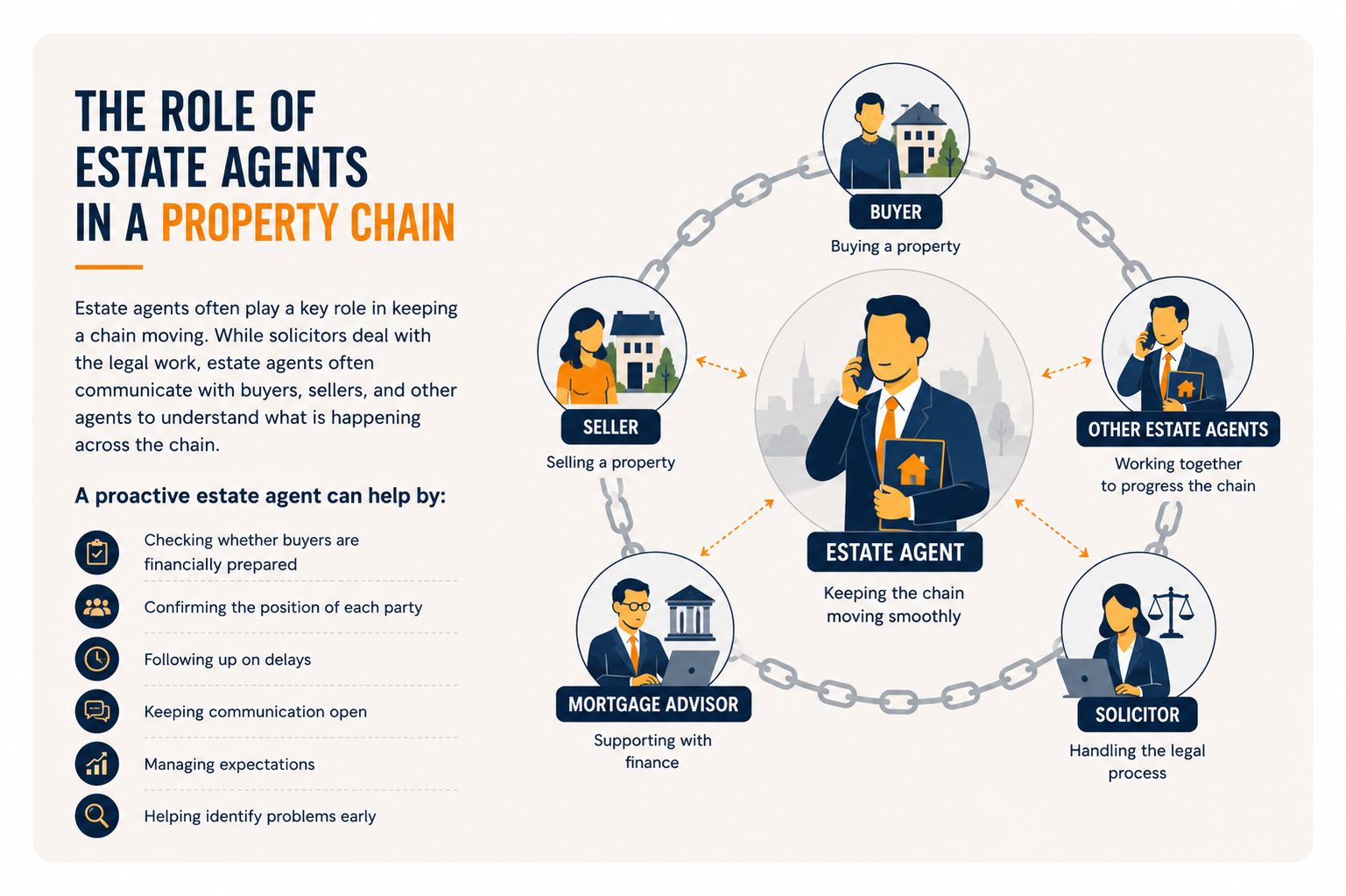
Estate agents often play a key role in keeping a chain moving. While solicitors deal with the legal work, estate agents often communicate with buyers, sellers, and other agents to understand what is happening across the chain. A proactive estate agent can help by:
  • Checking whether buyers are financially prepared
  • Confirming the position of each party
  • Following up on delays 
  • Keeping communication open 
  • Managing expectations 
  • Helping identify problems early 

This is one reason why communication matters when choosing an estate agent, especially if you are selling a property as part of your own buying journey. A cheaper online agent may appear attractive because of lower fees, but communication should also be considered. If poor communication causes delays, the financial consequences can sometimes outweigh the saving on fees. Delays may lead to ongoing costs such as mortgage payments, rent, council tax, insurance, utility bills, and maintenance costs. A low fee does not always mean better overall value if the service does not keep the transaction moving.

The Role of Solicitors

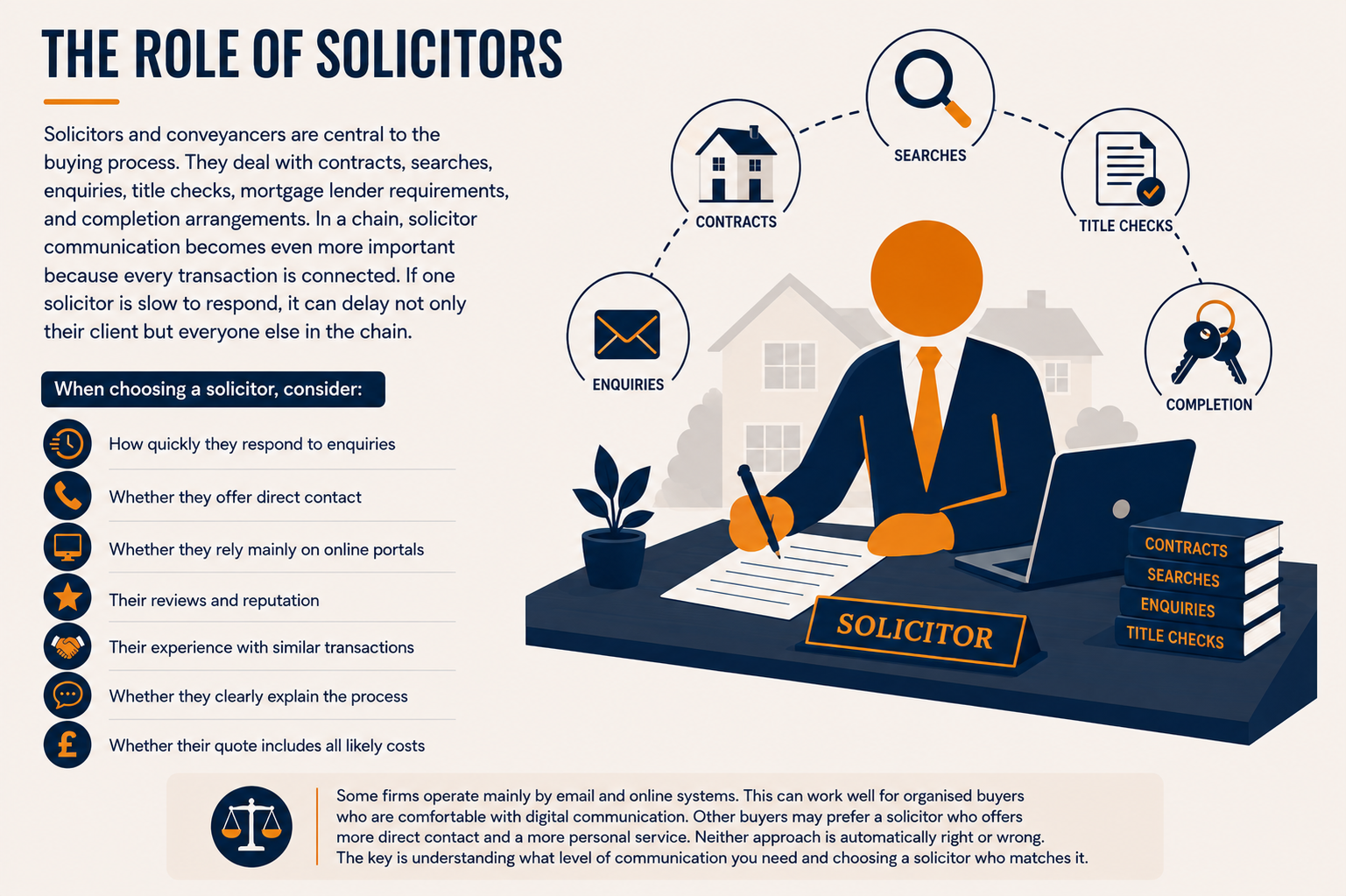
Solicitors and conveyancers are central to the buying process. They deal with contracts, searches, enquiries, title checks, mortgage lender requirements, and completion arrangements. In a chain, solicitor communication becomes even more important because every transaction is connected. If one solicitor is slow to respond, it can delay not only their client but everyone else in the chain. When choosing a solicitor, consider: 

  • How quickly they respond to enquiries 
  • Whether they offer direct contact 
  • Whether they rely mainly on online portals 
  • Their reviews and reputation 
  • Their experience with similar transactions 
  • Whether they clearly explain the process 
  • Whether their quote includes all likely costs 


Some firms operate mainly by email and online systems. This can work well for organised buyers who are comfortable with digital communication. Other buyers may prefer a solicitor who offers more direct contact and a more personal service. Neither approach is automatically right or wrong. The key is understanding what level of communication you need and choosing a solicitor who matches that expectation.

Common Reasons Property Chains Get Delayed

Property chains can be delayed for many reasons. Some delays are minor and easily resolved. Others can place the whole transaction at risk.
Common causes include:
  • Mortgage offer delays
  • Survey issues
  • Missing documents
  • Slow responses to legal enquiries
  • Problems with the property title
  • Leasehold management pack delays
  • Search delays
  • Buyers or sellers changing their plans
  • Disagreements over fixtures and fittings
  • Issues discovered late in the process
  • Completion date disagreements
Leasehold properties can sometimes involve extra delays because the solicitor may need information from the freeholder, managing agent, or management company. This can include service charge details, ground rent information, building insurance, planned works, and management packs.
The earlier key documents are requested, the better. Waiting too long can create unnecessary pressure later.

Questions to Ask About the Chain

Before making an offer, or shortly after your offer is accepted, it is sensible to ask questions about the chain.
Useful questions include:
  • Is the seller buying another property?
  • Has the seller found somewhere to buy?
  • How many properties are in the chain?
  • Is anyone in the chain waiting for a mortgage offer?
  • Are solicitors already instructed?
  • Are there any known delays?
  • Is the property vacant?
  • Is the seller moving into rented accommodation?
  • Has the chain been fully formed?
You may not receive every answer immediately, but asking these questions helps you understand the level of risk and uncertainty involved.

How Buyers Can Help Keep the Process Moving

";
You cannot control every part of a property chain, but you can make sure your own position is organised.

;

Before making an offer, try to have:

";

Before making an offer, try to have:

  • A mortgage Agreement in Principle
  • Proof of deposit
  • Identification documents ready
  • A solicitor or conveyancer selected
  • A clear understanding of your budget
  • Your key questions prepared
  • Realistic timescale expectations
;

Once your offer is accepted, act quickly.

";
Instruct your solicitor, submit documents, respond to requests, arrange your mortgage application, and book your survey promptly.
The more prepared you are, the less likely you are to become the cause of delay.
;

Why Communication Can Save Money

Delays are not just frustrating. They can also become expensive.
Depending on your situation, delays may result in:
  • Extra rent payments
  • Extra mortgage payments
  • Storage costs
  • Additional insurance costs 
  • Utility bills
  • Council tax 
  • Removal date changes 
  • Good communication helps identify problems early. It allows people to make decisions, adjust expectations, and avoid last-minute surprises.


In property, silence is rarely helpful. If something is unclear, it is usually better to ask than wait and hope it resolves itself.

Why a Realistic Budget Matters

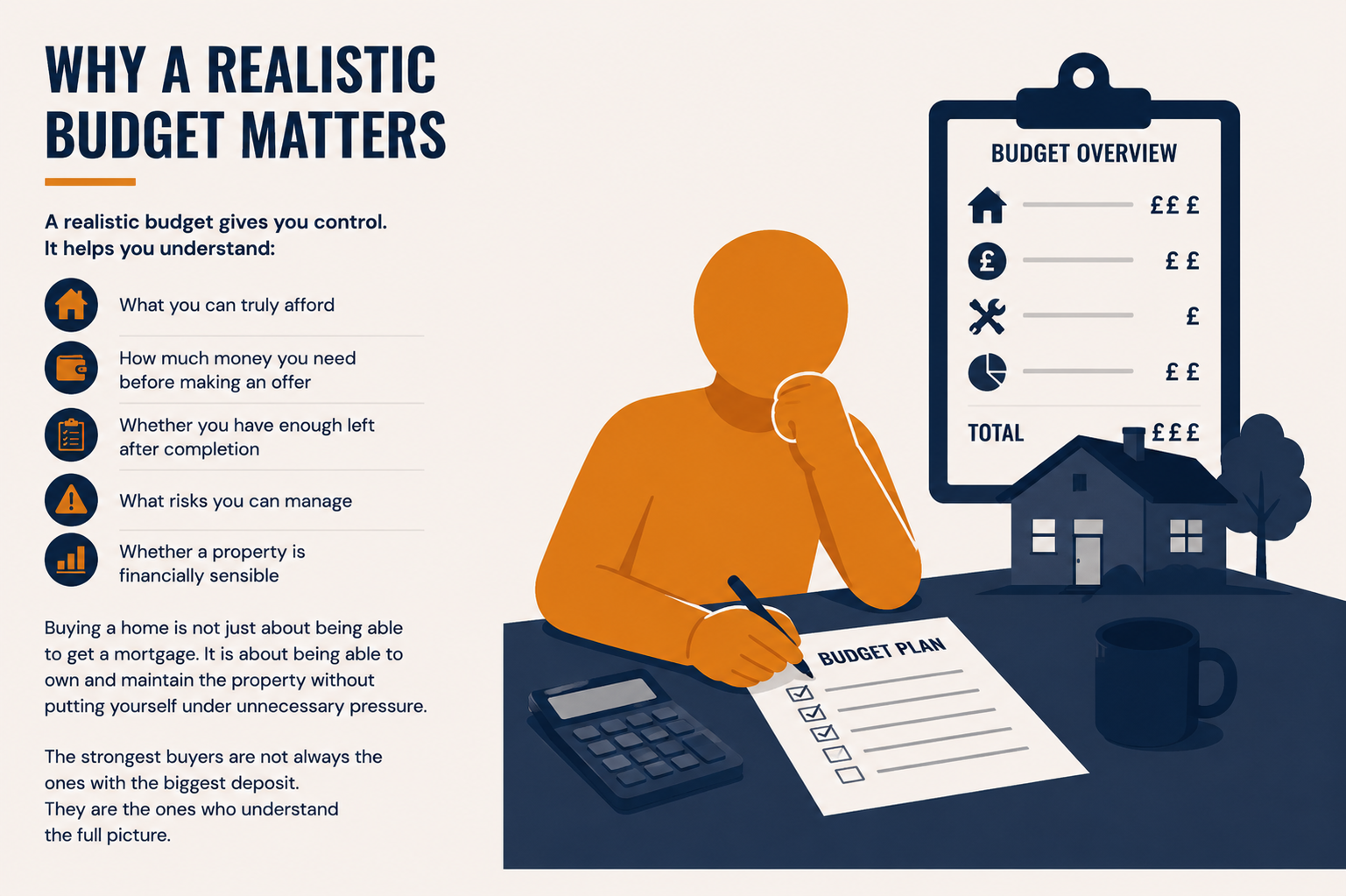
A realistic budget gives you control.
It helps you understand:
  • What you can truly afford
  • How much money you need before making an offer
  • Whether you have enough left after completion
  • What risks you can manage
  • Whether a property is financially sensible
Buying a home is not just about being able to get a mortgage. It is about being able to own and maintain the property without putting yourself under unnecessary pressure.
The strongest buyers are not always the ones with the biggest deposit. They are the ones who understand the full picture.

Final Thoughts

Property chains are a normal part of the UK buying process, but they can feel confusing if you have never dealt with one before. As a first-time buyer, you may be in a strong position because you are often chain-free, but your purchase can still be affected by other transactions linked to the seller.
The key to managing a chain is understanding who is involved, how prepared each party is, and how well communication is being handled. Estate agents, solicitors, buyers, sellers, and mortgage brokers all have a role to play in keeping the process moving.
A property chain does not need to be feared, but it does need to be understood. By asking the right questions, choosing responsive professionals, and staying organised, you can reduce uncertainty and give yourself a stronger chance of reaching completion with confidence.
Buying a home is not only about finding the right property. It is also about understanding the process that gets you safely to the keys.
Want to know more?

Explore courses and resources that cover everything you need to know about buying your first UK property

Created with